
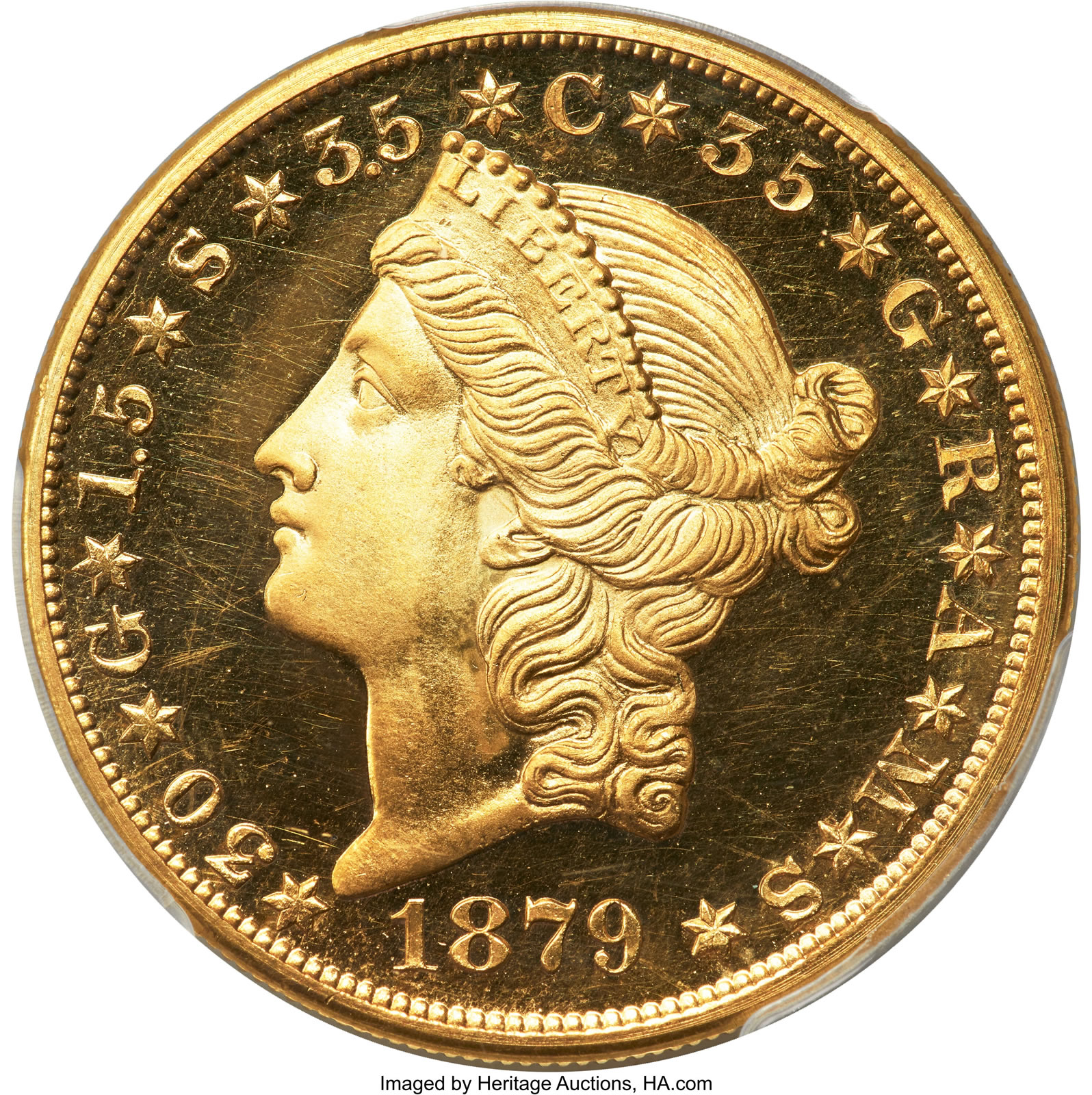

A $20 gold pattern with only five known examples will take center stage in Heritage Auctions’ ANA U.S. Coins Signature Auction, scheduled for Aug. 31 through Sept. 5.
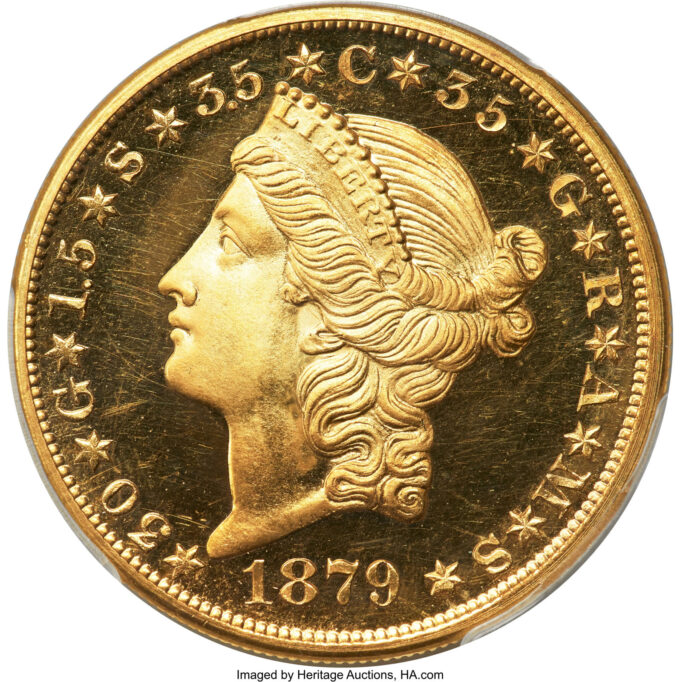
The 1879 Liberty Head Quintuple Stella, Judd-1643, Pollock-1843, is graded PR64+ Deep Cameo by PCGS and comes from the Bob R. Simpson Collection. Heritage identifies it as the finest-certified example.
Only four of the five known Quintuple Stellas are privately held. The fifth belongs to the National Numismatic Collection at the Smithsonian Institution, effectively reducing the number potentially available to collectors.
Unlike the familiar $4 stellas of 1879 and 1880, the Quintuple Stella was struck with a $20 denomination. Sometimes described as a metric double eagle, it belongs to the experimental coinage associated with efforts to create U.S. gold pieces based on metric standards.
“This issue is extraordinarily rare, and the one offered in this auction, from the acclaimed Bob R. Simpson Collection, is the finest-certified example,” says Todd Imhof, Executive Vice President at Heritage Auctions. “This is a numismatic treasure that continues the tradition of elite coins from the collection that Heritage is proud to offer to the most serious collectors.”
Another major rarity from Part XIII of the Simpson Collection is a unique 1876 Liberty double eagle, Judd-1490, Pollock-1643, graded PR64+ Cameo by PCGS and approved by CAC.
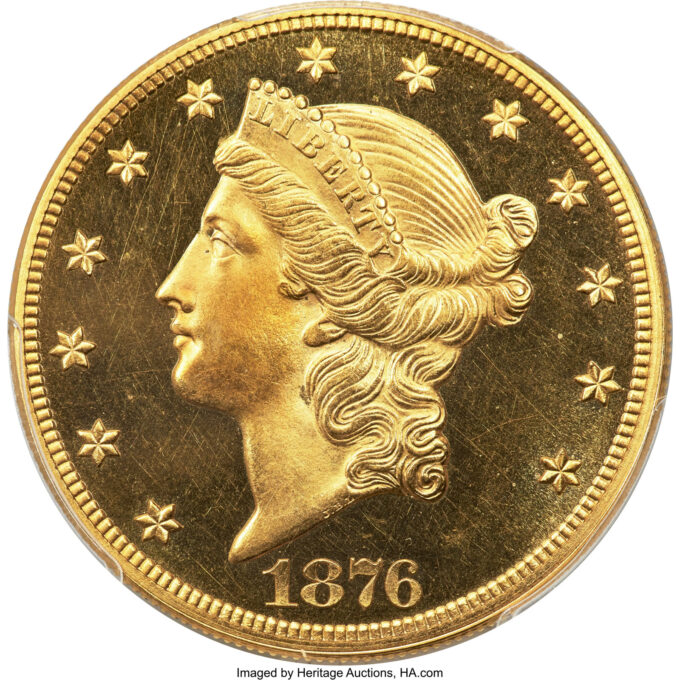
The coin represents an experimental step toward the Type Three Liberty Head double eagle adopted for circulation the following year. Despite being the only example known today, it escaped notice by 19th-century collectors and did not emerge in numismatic records until the early 1900s.
Costa Collection Brings Three $4 Stellas
Three additional stellas come from the 51-lot Costa Family Collection, Part III, giving the auction an unusually concentrated group of rarities from the short-lived $4 denomination.
The highest-graded of the three is an 1879 Coiled Hair Stella, Judd-1638, Pollock-1838, certified PR67 Cameo by NGC. Fourteen examples have been traced, and the auction coin shares the highest certified grade.
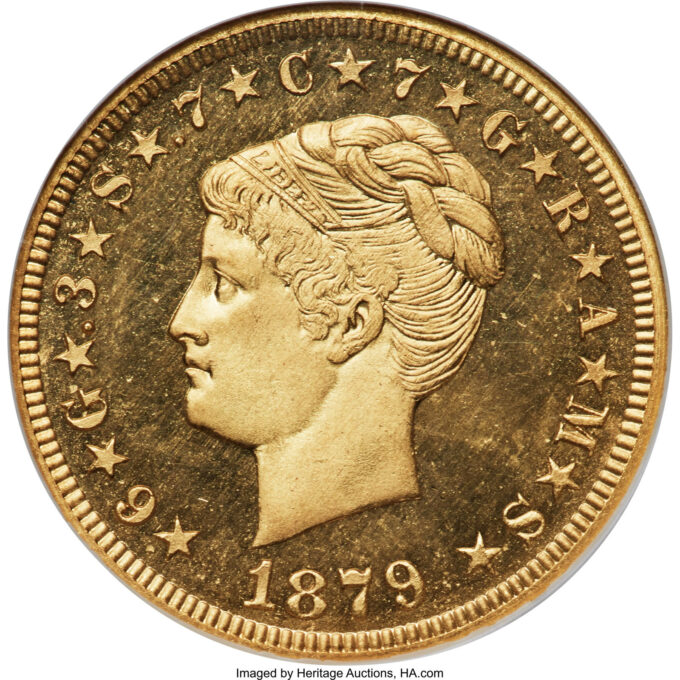
Although stellas traditionally have been cataloged with U.S. patterns, collectors increasingly treat them alongside regular federal gold issues because of their prominence and longstanding inclusion in major U.S. coin references.
An 1880 Coiled Hair Stella, Judd-1660, Pollock-1860, graded PR64 Cameo by PCGS, is even scarcer. Heritage has identified 10 surviving examples, the lowest population among the four principal stella varieties.
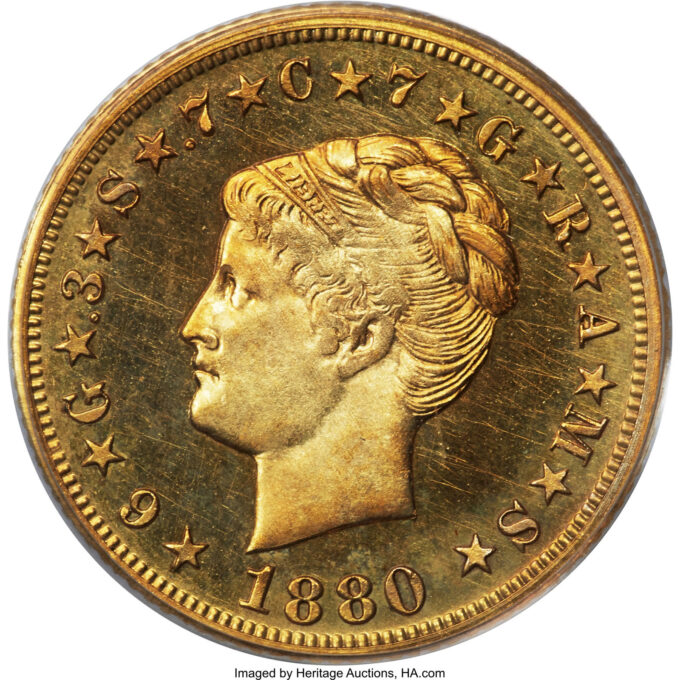
That count recently became clearer after Heritage specialists had an opportunity to compare the auction coin directly with another example known as the Kern specimen. Their pedigrees had previously overlapped in numismatic records, contributing to an earlier count of nine known pieces.
The Costa Collection also includes an 1880 Flowing Hair Stella, Judd-1657, Pollock-1857, graded PR66 by NGC. Heritage has confirmed 18 examples. Like the other $4 stellas, it was never authorized as a regular circulating issue but became firmly established as a major U.S. gold rarity.
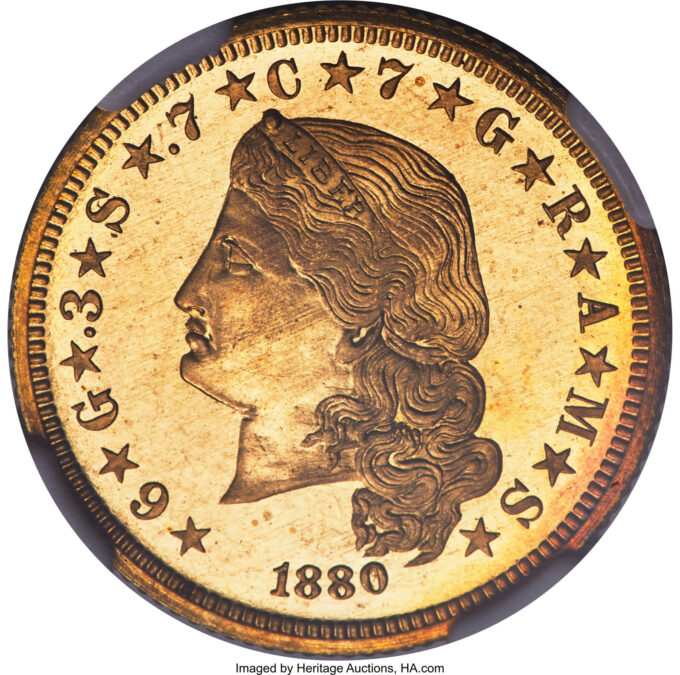
Both the 1880 Coiled Hair and Flowing Hair stellas have earned places in prominent numismatic references, including lists of the 100 Greatest U.S. Coins.
Early Gold and Carson City Coins
Another featured group, the Round Lake Collection, contributes more than 60 lots.
Its leading coin is a 1798/7 Capped Bust $10 eagle with the 7×6 Stars arrangement, BD-2, graded MS62 by PCGS. The grade places it among the finest surviving examples.
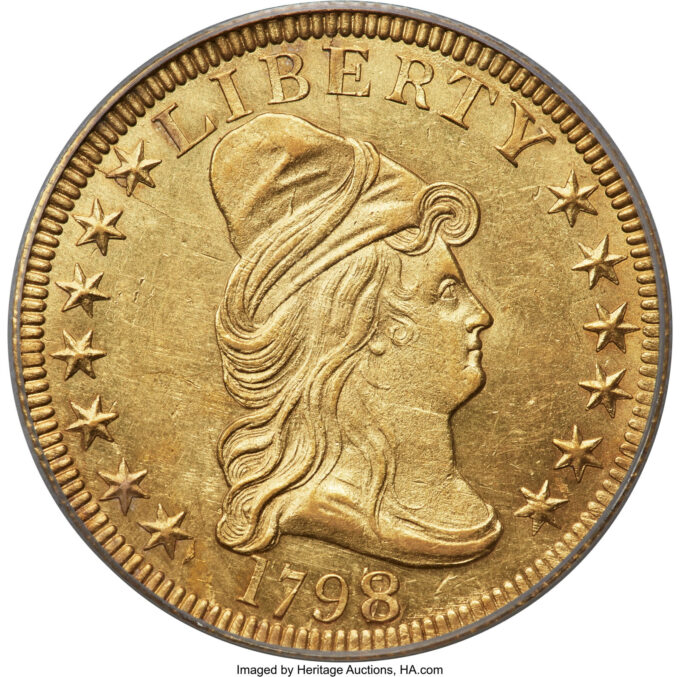
PCGS CoinFacts ranks the coin second in its Condition Census. The example ahead of it is part of the Smithsonian’s National Numismatic Collection and therefore unavailable to private collectors.
The auction specimen also carries a pedigree extending back more than a century. It appeared in the William Woodin Collection sold by Thomas Elder in March 1911.
Carson City gold and silver are represented by 43 lots from the Reno-Carson City Collection.
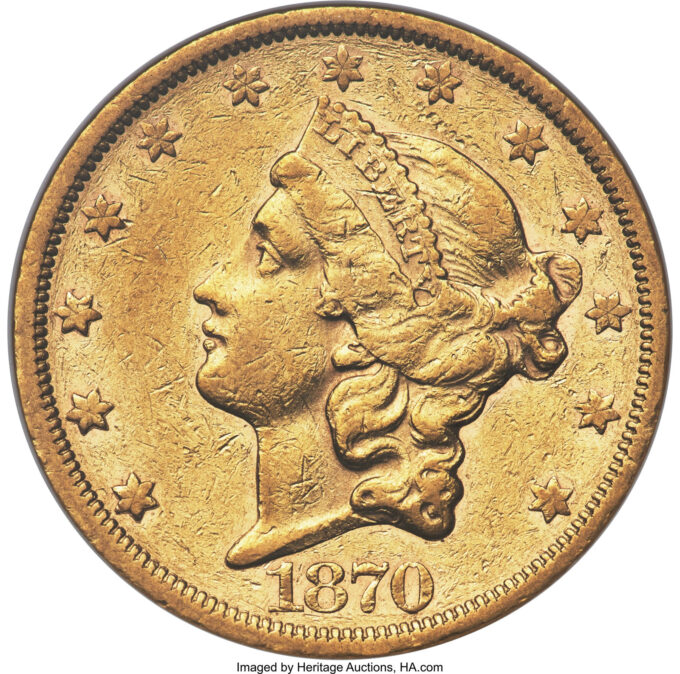
Among them is an 1870-CC double eagle graded XF40 by NGC. Produced during the first year of coinage at the Carson City Mint, the issue has long been regarded as an important early rarity from the Nevada facility.
The same collection contains an 1889-CC Morgan dollar graded MS64 by NGC and approved by CAC. With only 350,000 struck, the date already ranks among the key Morgan dollars, and Mint State survivors are considerably scarcer than circulated examples.
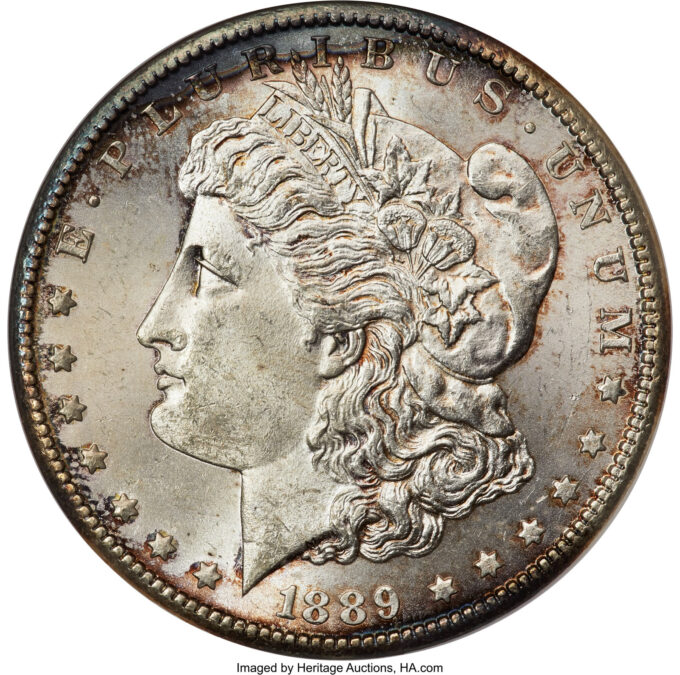
NGC has graded only six examples higher than the coin being offered.
Top PCGS Registry Set of Lincoln Proof Cents
The 26-lot Bolt Collection focuses entirely on proof Lincoln cents from 1909 through 1958 and ranks as the all-time finest set in the PCGS Registry for the series.
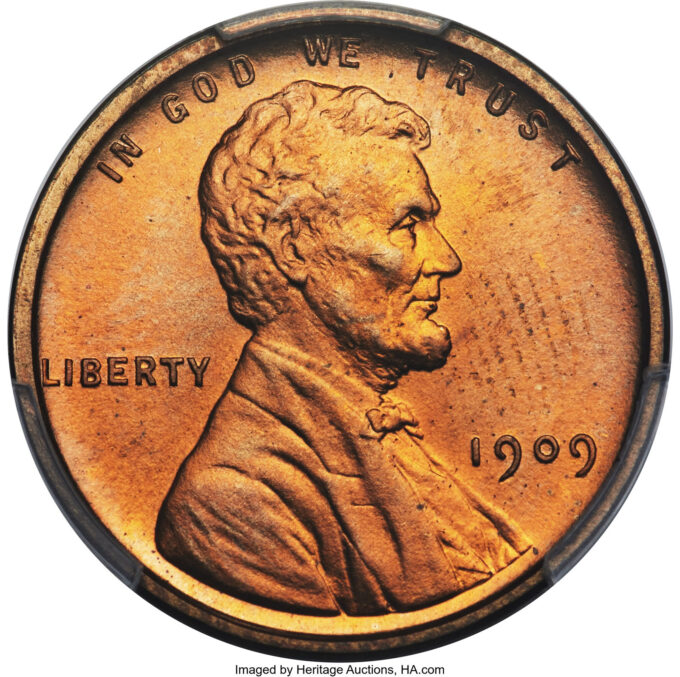
At its head is a 1909 Lincoln cent graded PR68 Red by PCGS and approved by CAC. No example has received a higher grade from PCGS.
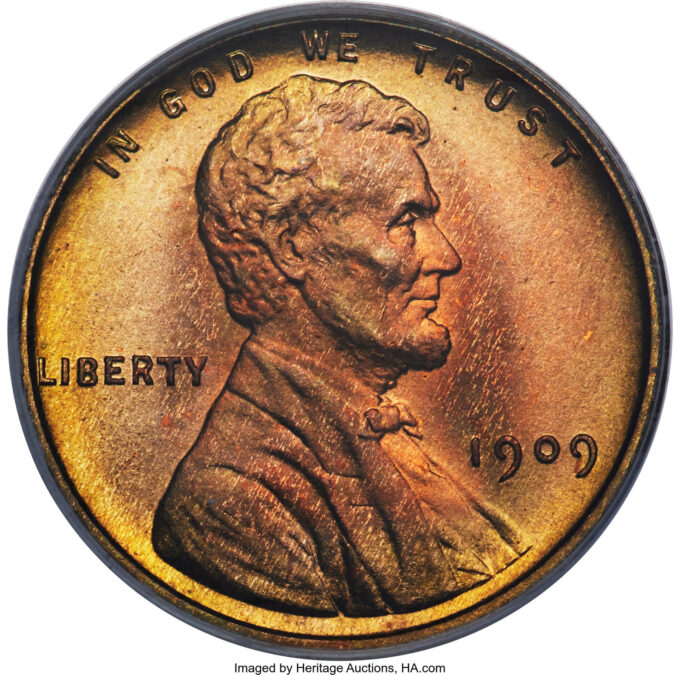
Proof Lincoln cents underwent several changes during their first year. The Mint began 1909 with proof Indian Head cents, followed with the new Lincoln design bearing Victor David Brenner’s VDB initials, then removed those initials and modified the reverse before producing additional proofs.
The Bolt Collection also includes a 1909 VDB cent graded PR66 Red PCGS with CAC approval, a 1914 cent graded PR68+ Red PCGS with CAC approval and a 1955 cent graded PR69 Red Deep Cameo by PCGS.
Bearded Goddess Half Dollar Highlights Van Cleve Collection
Early silver appears prominently in the 57-lot Van Cleve Family Collection.
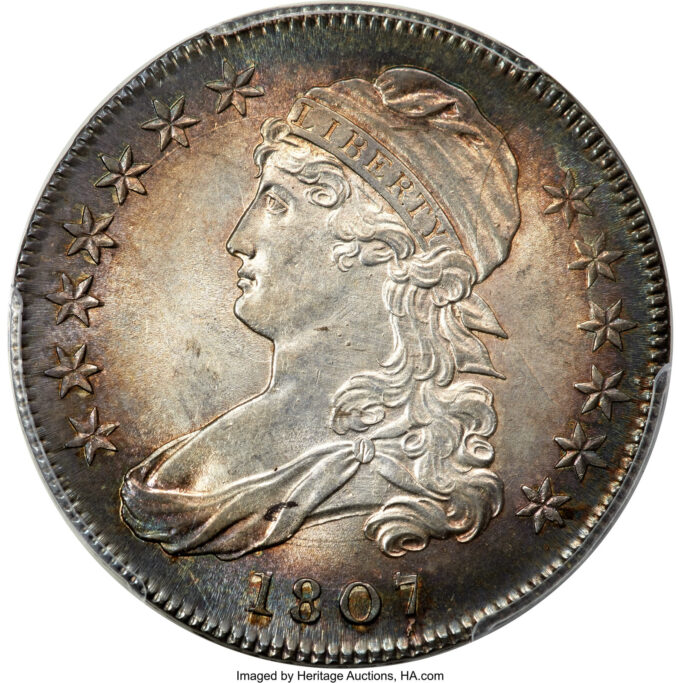
One highlight is an 1807 Capped Bust half dollar, O-111b, graded AU53 by PCGS and approved by CAC. Collectors know the late die state as the Bearded Goddess because a heavy die crack cuts downward from Liberty’s chin across the bust.
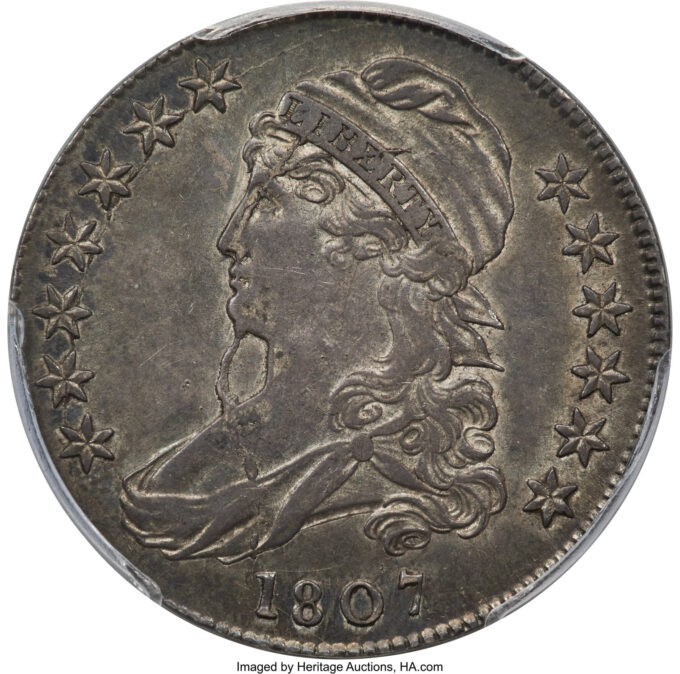
The collection also offers an 1807 Capped Bust half dollar with Large Stars, O-114, graded MS65 PCGS and approved by CAC. Only two examples have been certified at higher numeric grades.
Newly Discovered 1795 Cent Shows 1794 Coin Beneath
A particularly unusual early copper is a 1795 Lettered Edge cent, S-76, graded AU58+ by PCGS, that was struck over a 1794 large cent.
Kentucky numismatist Jeff Garrett located the coin at the Berlin Coin Fair, and its importance comes not just from the overstrike but from how clearly portions of the earlier cent remain visible.
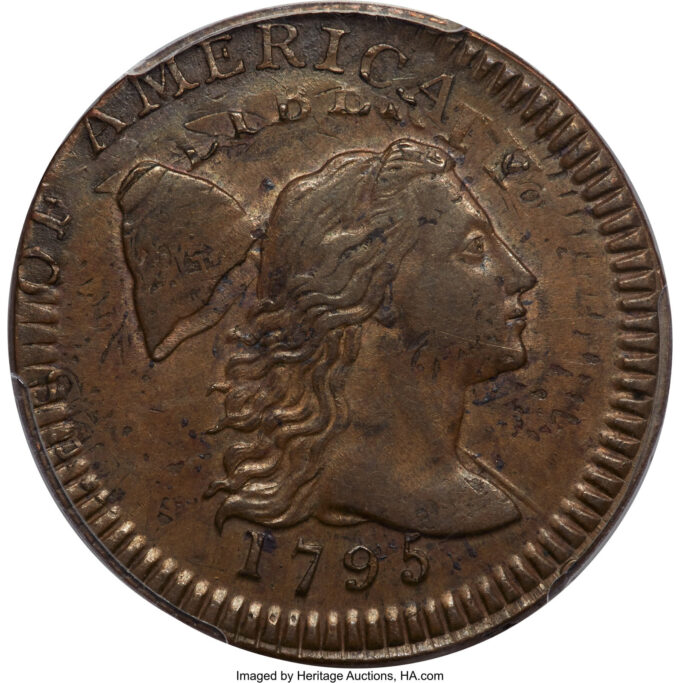
Only two other 1795 S-76 cents are known with identifiable 1794 large cent undertypes, and both are lower grade. The newly discovered piece provides unusually strong visual evidence of the host coin beneath the 1795 strike.
The cent was unknown to specialists in early American copper until January 2026.
Additional ANA Auction Highlights
Other significant coins scheduled for the Heritage sale include a 1797 half eagle with the Small Eagle reverse, 16 Stars, BD-4, graded AU58+ PCGS; an 1860-O half dollar indented by a half dime planchet and offered with its mated pair, graded MS63 PCGS; and the finest-known 1897-S double eagle, graded MS67 PCGS and approved by CAC.
The auction also features an 1893-O Morgan dollar graded MS65 PCGS with CAC approval, one of nine known original 1827/3 quarters graded PR64 PCGS, and one of no more than seven recognized proof 1849 No L gold dollars, graded PR62 PCGS.
Heritage’s ANA U.S. Coins Signature Auction will be conducted across six sessions from Aug. 31 through Sept. 5.
Coin & Numismatic News,Coin Shows, Auctions and Numismatic Eventscoin & numismatic news,coin shows, auctions and numismatic events#Quintuple #Stella #Headlines #Heritage #ANA #Auction1788147318
