
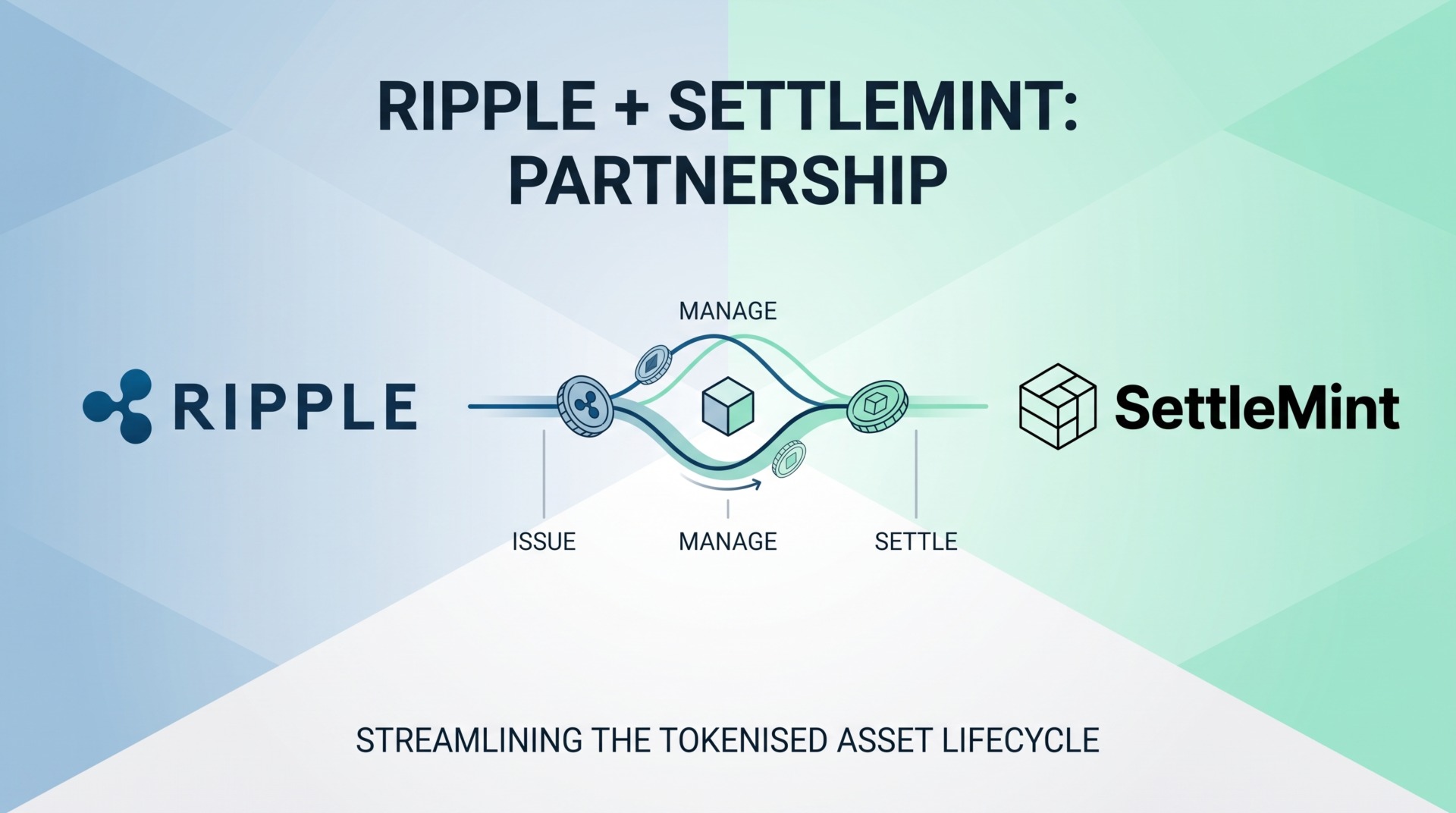

- Ripple and SettleMint have partnered to combine Ripple’s Custody platform with SettleMint’s Digital Asset Lifecycle Platform (DALP), giving regulated institutions a single system for tokenised assets.
- The tie-up targets banks and fintechs that want to handle issuance, custody, compliance and servicing without stitching together multiple vendors.
- Ripple has built out its custody arm through partnerships with Securosys and Figment, a Chainalysis integration and the acquisition of Palisade, while SettleMint’s DALP already runs in production across several regions.
- The offering has launched in Asia Pacific, with Boston Consulting Group forecasting tokenised real-world assets could reach US$88 trillion by 2035 as banks face pressure to adapt.
Soon banks won’t need to juggle quite so many crypto vendors if Ripple and SettleMint get their way.
The two firms have teamed up to offer regulated financial institutions a single setup for handling tokenised assets from issuance through to custody and ongoing management. The deal combines Ripple’s Custody platform with SettleMint’s Digital Asset Lifecycle Platform (DALP), bringing functions that are often split between several providers under one roof.
That’s aimed squarely at banks, fintechs and other regulated players that want to get into tokenised assets without building a small digital-asset supply chain just to make it work.
One Platform, Fewer Moving Parts
Ripple’s custody business has been on a bit of a shopping spree. Over the past year it’s added partnerships with Securosys and Figment, folded in a Chainalysis integration, and picked up custody specialist Palisade through acquisition. The reason behind it all: make it simpler for institutions to secure digital assets, stablecoins and real-world assets.
Read also: Bitcoin Treasury Titans Reload: Strive and Strategy Add $513M in BTC
In a press release SettleMint said it takes care of the other side of the equation. Its DALP platform lets institutions create and issue tokenised assets, then handle what comes next: compliance, settlement and the ongoing servicing work. The company says the platform is already running in production and pre-production programmes across North America, Europe, the Middle East and Asia Pacific.
Keeping custody and lifecycle management under one roof means institutions aren’t stitching together separate providers, with the permissioning and compliance controls that heavily regulated firms expect built in.
It’s already live in Asia, with Ripple and SettleMint eyeing other markets as demand grows.
Banks Are Being Pushed Onchain, Ready Or Not
There’s a bigger bet behind the deal: Boston Consulting Group reckons tokenised real-world assets could hit US$88 trillion (AU$123 trillion) by 2035. Banks that don’t adapt, a May 2026 report warns, risk losing up to 30% of their profits over the same stretch.
That could hand banks new ways to make money from tokenised funds, automated collateral and custody, while nudging their role from traditional middlemen toward infrastructure providers.
Ripple’s Fiona Murray said institutions in Asia Pacific are already asking how to expand their digital asset operations without relying on a patchwork of separate systems. SettleMint’s chief executive Adam Popat isn’t far off that view either, arguing capital markets are moving fully onchain and that custody and lifecycle management need to operate as one.
Read more: Ripple Secures Full EU MiCA License, Clearing Path for Crypto Expansion Across Europe
Banks,Ripple,Tokenisation#Ripple #SettleMint #Join #Forces #Streamline #Tokenised #Asset #Lifecycle1788333974
