
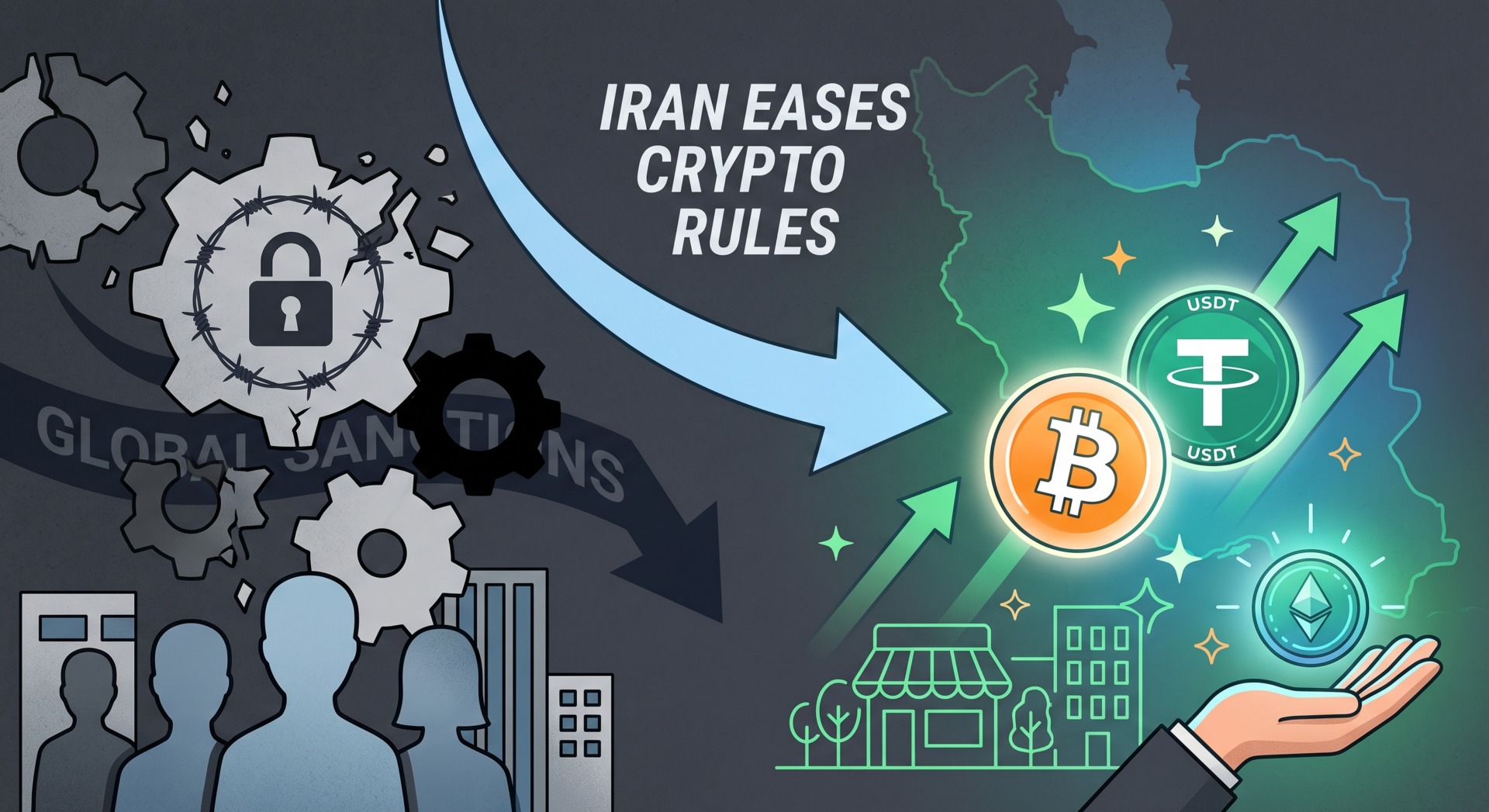

- Iran is easing currency controls, allowing businesses to use crypto to move overseas earnings and facilitate trade.
- Washington has made crypto a key target of its broader sanctions campaign against Iran.
- The US has sanctioned Iranian exchanges and wallets, while Tether has frozen hundreds of millions of dollars linked to Iran.
- Iran’s significant Bitcoin mining industry provides another way for the country to earn crypto outside traditional trade channels.
Iran is loosening its strict currency controls and leaning on cryptocurrencies – especially Tether and Bitcoin – to keep trade moving as the US blocks its ports and squeezes its economy with sanctions, the Financial Times reports.
Years of tight capital controls had already pushed Iranian businesses to stash more than US$100 billion (AU$138 billion) in undeclared funds at home and abroad; now, according to the FT report, insiders say, the central bank is quietly letting funds through by whatever route works, including crypto exchanges. As one executive close to the regime put it, the central bank “doesn’t ask how that money was transferred”.
Read more: Australia Removes 45 Remittance and Crypto Firms From AML Registers
Washington’s Response
In August, the US Treasury launched Operation Economic Outcast, naming crypto one of five targeted sectors alongside technology, gold, aviation and shipping. That followed earlier action in June, when the US sanctioned Iran’s largest crypto exchange, Nobitex, and other digital-asset networks over alleged sanctions evasion and ties to the IRGC.
The US Treasury has cast digital assets as Tehran’s sanctions-evasion tool of choice, and Washington has moved to penalise Iran’s trading partners, including banks in Egypt and Turkey. Tether itself froze US$344 million (AU$476 million) linked to Iran’s central bank in April, though nearly US$10 billion (AU$13.8 billion) in crypto still flowed through the country in 2025, per TRM Labs.
Back in July, the US Treasury added four Tron wallets linked to Iran’s central bank to its sanctions list, leading Tether to freeze about US$131 million (AU$181 million) in USDT held in those addresses, as we reported here. The US has sanctioned Iran’s central bank since 2019 over ties to the IRGC, Hezbollah and the Qods Force, according to the Treasury.
Read also: DBS and Citi Complete First Weekend Tokenised Cross-Border Payment
Treasury Secretary Scott Bessent said the US remained committed to disrupting Iran’s financial system, including through the use of crypto, and would continue to work to “deny the Iranian regime access to the proceeds of its illicit revenue schemes”.
Bitcoin mining adds another channel: Iran accounts for roughly 4.5% of global mining activity, allowing Iran to earn crypto directly rather than through trade. As Tehran economist Saeed Laylaz told the FT, sanctions pressure only deepens Iran’s reliance: “the blockade has holes”.
Cryptocurrency Law,Iran,USD1#Iran #Eases #Crypto #Rules #Sanctions #Push #Businesses #Bitcoin #USDT1789014819
