
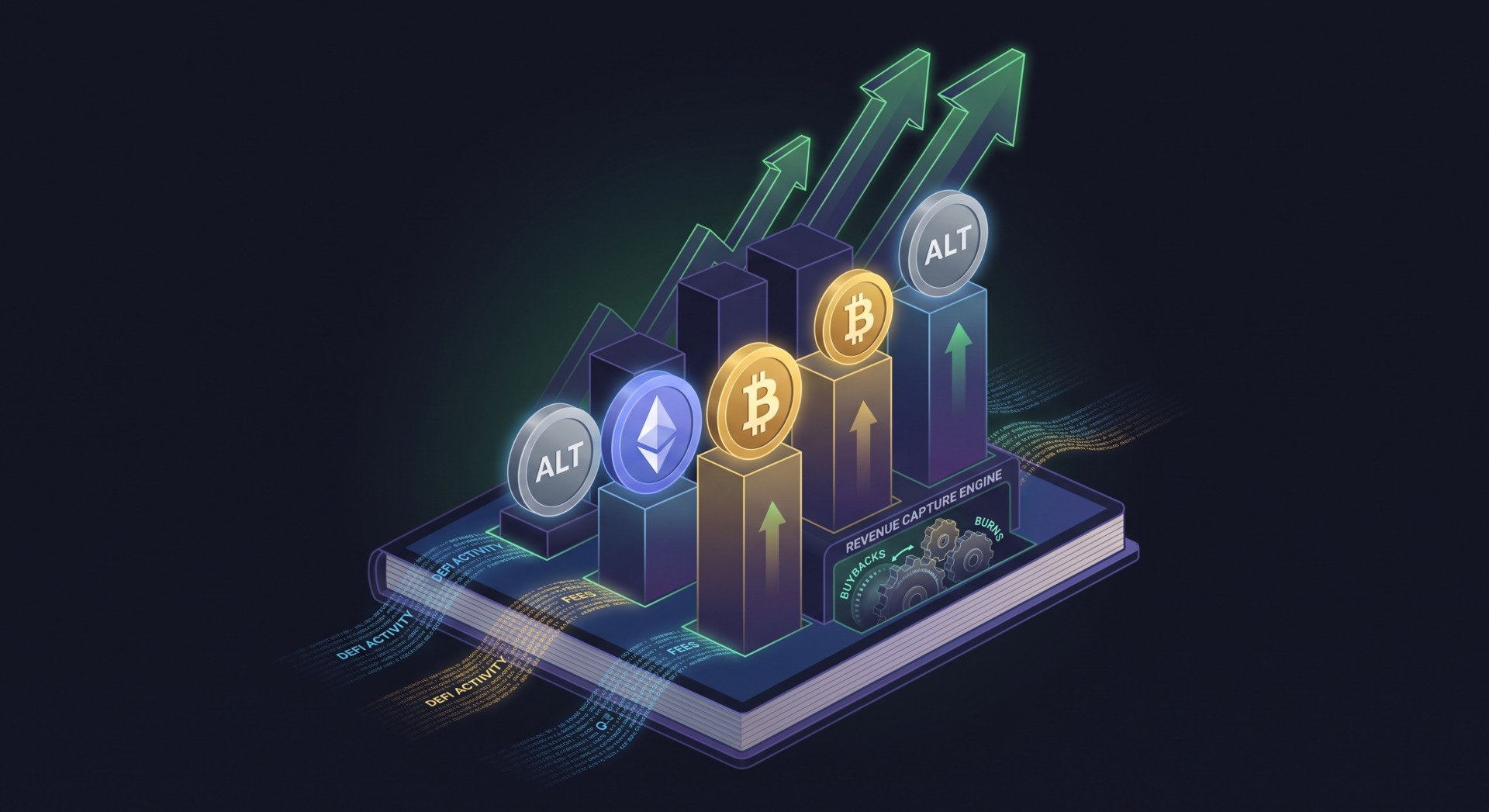

- Hougan argues crypto valuations may have significant room to rise as protocols increasingly return revenue to token holders through buybacks and burns.
- Hyperliquid, Uniswap, Aave, Pump.fun and Lighter demonstrate different approaches to connecting protocol activity with native-token economics.
- Revenue capture is also reaching layer-1 networks, although token holders remain exposed to changing community-set tokenomics rather than equity-style rights.
Crypto assets could at least double in value as more blockchain protocols turn their revenues into token buybacks and burns, according to Bitwise CIO Matt Hougan. He said investors have not yet priced in the growing relationship between protocol revenue and native-token value, leaving some assets undervalued.
According to Hougan, the market is entering a period in which revenue will increasingly shape crypto valuations outside Bitcoin. Protocols that return revenue through token purchases and burns can give investors a clearer connection between economic activity and token value.
Hyperliquid is among the clearest examples, having generated more than US$800 million (AU$1.136 billion) in revenue last year and allocated about 99% of its fee income towards buying and burning HYPE. The exchange has bought and burned US$1.3 billion (AU$1.846 billion) worth of the token since its launch in November 2024.
Related: a16z-Backed Proof of Play Shuts Down, Open-Sources Pirate Nation Assets
Blockchains Embrace Revenue Capture
Other protocols are following the same model. Uniswap generates around US$100 million (AU$142 million) in annual revenue, while Aave is targeting approximately US$30 million (AU$42.6 million) in yearly token burns. Pump.fun has burned US$370 million (AU$525.4 million) worth of PUMP, while Lighter has repurchased roughly 6% of its circulating LIT supply.
The approach is spreading to layer-1 networks, with Solana considering a proposal that could increase fee burns by up to 14 times and Aptos reporting almost three times the transaction activity after a tenfold gas-fee increase.
Hougan expects DeFi applications and layer-1 networks to expand revenue-capture mechanisms over the next 12 to 24 months. However, he noted that token economics remain subject to community decisions and token holders do not have shareholders’ legal claims to cash flow.
Related: Reporter Poses as VC to Expose Suspected North Korean Crypto Operatives
Blockchain,Cryptocurrency#Crypto #Tokens #Double #RevenueDriven #Buybacks #Hold #Bitwise #CIO1786694129
