
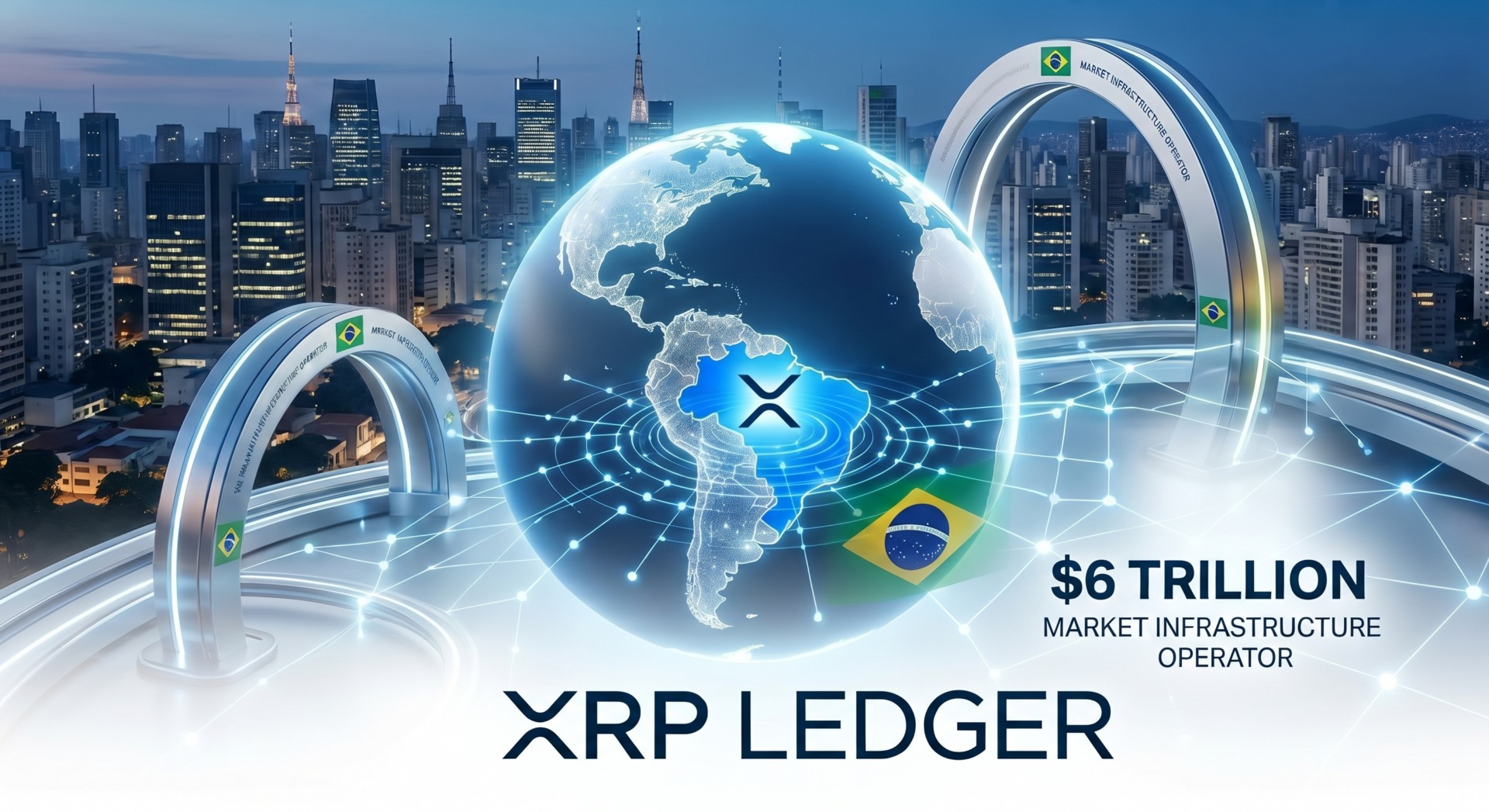

- Ripple and CSD BR are bringing XRPL into Brazil’s regulated capital markets through a live fund-record mirroring project.
- CSD BR is using XRPL to mirror ownership records for selected BTG Pactual investment funds while retaining its existing legal records.
- The first phase will test the technology under real operating conditions, with access limited to approved corporate and banking clients.
- Future stages could include direct onchain asset issuance, trading by authorised participants and expansion beyond Brazil.
Ripple is bringing the XRP Ledger (XRPL) into Brazil’s regulated capital markets through a new partnership with CSD BR, one of the country’s financial market infrastructure providers.
CSD BR has started using XRPL to mirror ownership records for selected BTG Pactual investment funds, putting the network alongside infrastructure that holds more than BRL 22 trillion (AUD 6 trillion) in registered assets.
The blockchain isn’t replacing CSD BR’s existing systems. Those remain the legally recognised record, while XRPL provides a parallel version that authorised institutions can check against them.
XRPL Moves Beyond the Demo Stage
Fund shares held with CSD BR will also be represented on XRPL using its Multi-Purpose Token standard. Authorised institutions will be able to check that blockchain record against CSD BR’s own records.
The setup could make reconciliation and audits quicker when records don’t match. It also puts XRPL into a live regulated-market process rather than another proof-of-concept exercise.
Read also: Australia Warns Fake Job Scam by North Korean Hackers Has Stolen $10.7M in Crypto
Daniel Polano Spreafico, CSD BR’s head of products and clients, said the first phase is intended to test how “the technology performs under real operating conditions” and build a foundation for future development.
Access will remain restricted. The system is aimed at Brazilian corporate and banking clients that have already passed KYC and anti-money laundering checks.
CSD BR also retains control over the assets and participants. It can freeze or reverse transactions when required by regulators or courts.
Spreafico said CSD BR “chose to start with record mirroring because it is the safest and most responsible way to introduce a new technology into critical market infrastructure”.
Direct Onchain Issuance Could Come Next
CSD BR and Ripple already have a broader second phase in mind. If the initial rollout works as planned, future stages could involve issuing assets directly onchain. Authorised participants could also be allowed to trade them through the same infrastructure.
Real estate receivables certificates and agribusiness receivables certificates are among the products under consideration.
Privacy features are expected to follow as the platform develops, particularly if the system moves deeper into institutional finance.
BTG Pactual fund shares are the first assets covered, with CSD BR planning to extend the model to other products and institutions. Markets outside Brazil are also in view.
The more significant test will come if CSD BR moves from simply mirroring records to issuing regulated assets directly on XRPL.
Read more: XRP Ledger Holds More Value as RLUSD Growth Accelerates
Brazil,XRP,XRPL#XRP #Ledger #Expands #Brazil #Trillion #Market #Infrastructure #Operator1790837691
