What's Hot

    Kresus launches crypto inheritance service for self-custody wallet users

    July 9, 2026

    Why Bitcoin ATMs are becoming the last stop in America’s $11B crypto scam pipeline

    July 9, 2026

    Cardano’s wallet hack exposed the user layer holding its on-chain government together

    July 9, 2026
    Facebook Twitter Instagram
    • Business
    • Markets
    • Get In Touch
    • Our Authors
    Facebook Twitter Instagram
    Crypto News: Latest Cryptocurrency News and Analysis
    • Home
    • Business

      Fidelity Buys 7.4% Of Bitcoin Mining Company Marathon Digital Holdings

      February 11, 2021

      Twitter Reacts as Auto Driver Begins Accepting Crypto as Payment

      February 11, 2021

      HSBC Becomes Latest Bank to Suspend Payments to Crypto

      February 4, 2021

      Bitcoin Holds Support; Approaching $50K Resistance

      February 4, 2021

      Cryptocurrency Prices Today: Bitcoin Up Over $47,000, Ether Rises 3%

      February 3, 2021
    • Technology
      1. Business
      2. Insights
      3. View All

      Fidelity Buys 7.4% Of Bitcoin Mining Company Marathon Digital Holdings

      February 11, 2021

      Twitter Reacts as Auto Driver Begins Accepting Crypto as Payment

      February 11, 2021

      HSBC Becomes Latest Bank to Suspend Payments to Crypto

      February 4, 2021

      Bitcoin Holds Support; Approaching $50K Resistance

      February 4, 2021

      Kresus launches crypto inheritance service for self-custody wallet users

      July 9, 2026

      Why Bitcoin ATMs are becoming the last stop in America’s $11B crypto scam pipeline

      July 9, 2026

      Cardano’s wallet hack exposed the user layer holding its on-chain government together

      July 9, 2026

      U.S. Mint Launches 1776-2026 Reverse Proof Silver Dollars

      July 9, 2026

      Bitcoin Climbs as Elon Musk Says Tesla ‘Likely’ to Accept it Again

      March 16, 2021

      Can Cryptocurrency Be Hacked, Stolen Or Scammed? How Can You Be Safe?

      February 11, 2021

      How Investors Can Get In On Crypto Without Actually Buying Any

      February 4, 2021

      Ethereum Just Underwent a Major Change – Hence, The 25% Jump in a Week!

      February 4, 2021
    • Insights
      1. Bitcoin
      2. Ethereum
      3. Eurozone
      4. Monero
      5. View All

      DeFi Portfolio Tracker Zapper to Shut Down After Seven Years

      July 9, 2026

      XRP Ledger Upgrade Nears Activation as Validator Support Passes Key Threshold

      July 9, 2026

      Swyftx Secures Financial Services Licence, Paving the Way for Expanded Payments Offering

      July 9, 2026

      Bitcoin’s Market Outlook Divides Analysts as Price Struggles Below Peak

      July 9, 2026

      Why Bitcoin ATMs are becoming the last stop in America’s $11B crypto scam pipeline

      July 9, 2026

      Cardano’s wallet hack exposed the user layer holding its on-chain government together

      July 9, 2026

      CLARITY Act misses July target making August 7 a critical date for the bill

      July 9, 2026

      A $1 billion HYPE treasury trade is hitting public markets before liquidity has been tested

      July 9, 2026

      Kresus launches crypto inheritance service for self-custody wallet users

      July 9, 2026

      ARB jumps as Robinhood Chain fee-sharing strengthens long-term outlook

      July 9, 2026

      HYPE faces selling pressure as institutional demand keeps the $100 target alive

      July 9, 2026

      ADA bulls eye $0.20 as Cardano founder says Ethereum is adopting its eUTXO concept

      July 8, 2026

      U.S. Mint Launches 1776-2026 Reverse Proof Silver Dollars

      July 9, 2026

      US Mint Strikes Giant Silver Declaration of Independence Quarters

      July 8, 2026

      2026 Mint Set Premiums Surge Behind Scarce 1776-2026 Cents

      July 7, 2026

      Liberty Bell “250” Coins Headline July U.S. Mint Releases

      July 5, 2026

      Kresus launches crypto inheritance service for self-custody wallet users

      July 9, 2026

      Why Bitcoin ATMs are becoming the last stop in America’s $11B crypto scam pipeline

      July 9, 2026

      Cardano’s wallet hack exposed the user layer holding its on-chain government together

      July 9, 2026

      U.S. Mint Launches 1776-2026 Reverse Proof Silver Dollars

      July 9, 2026
    • Markets
    • Get In Touch
    Crypto News: Latest Cryptocurrency News and Analysis
    Home » Why Bitcoin ATMs are becoming the last stop in America’s $11B crypto scam pipeline
    Ethereum

    Why Bitcoin ATMs are becoming the last stop in America’s $11B crypto scam pipeline

    行政By 行政July 9, 2026No Comments8 Mins Read
    Share
    Facebook Twitter LinkedIn Pinterest Email

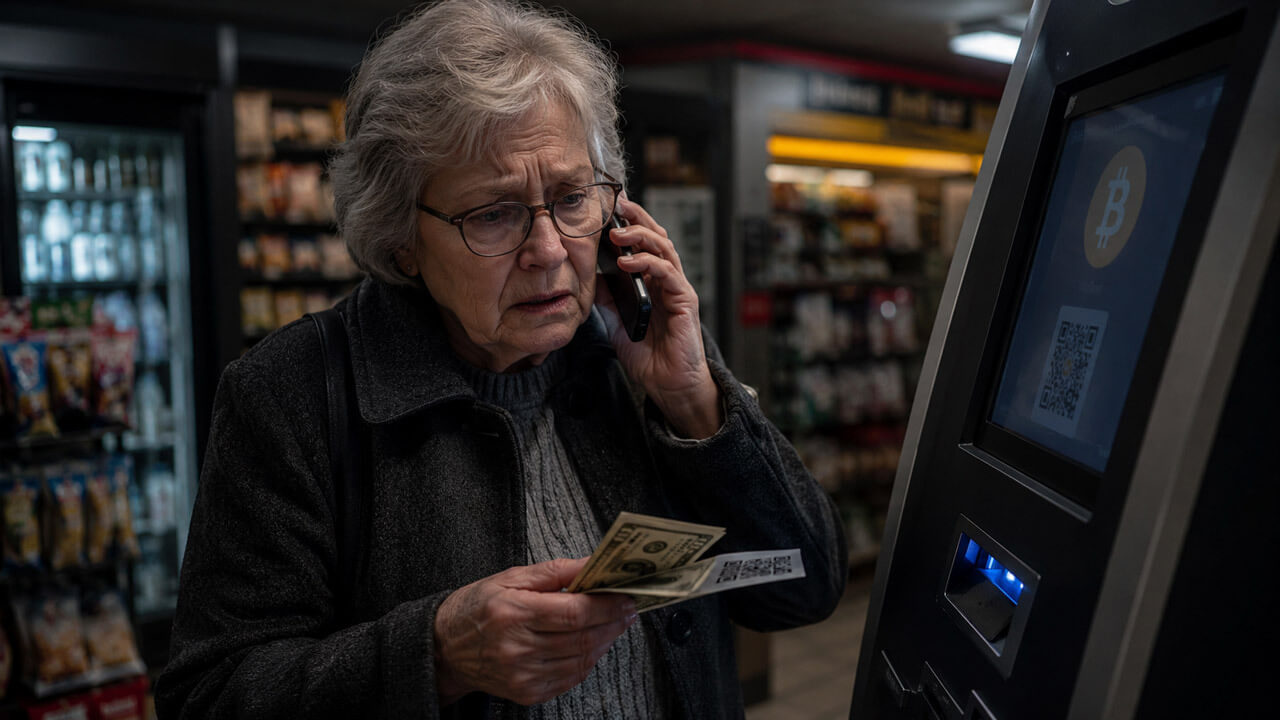
    Crypto scams start online with a fake bank alert, a cloned voice, a romance message, or a tech-support pop-up. Then, the last instruction is usually much more physical: withdraw cash, find a crypto kiosk, scan a QR code, and keep the scammer on the phone until the money is gone.

    However, that last step is turning Bitcoin ATMs and other crypto kiosks into a pressure point in America’s fraud problem.

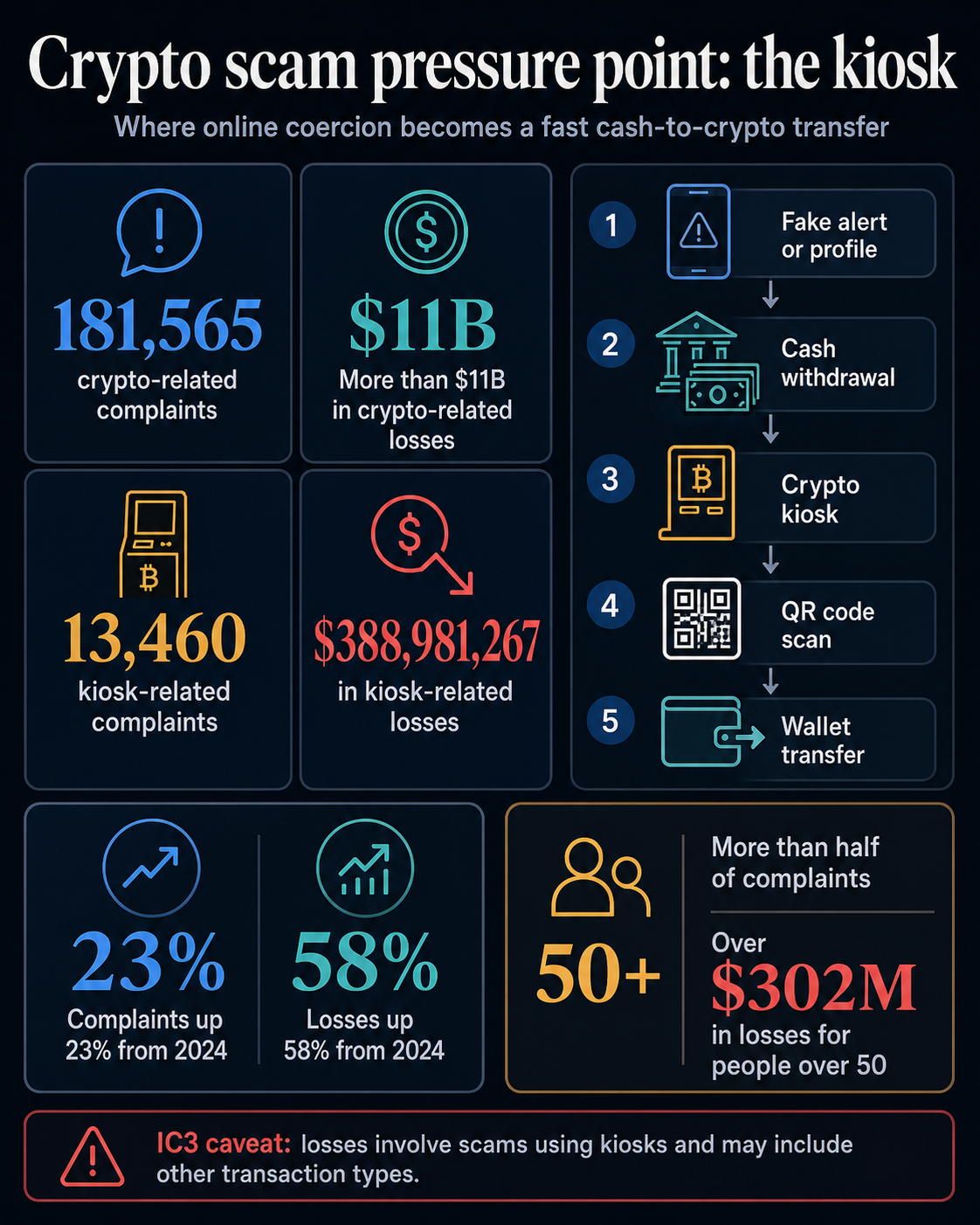
    The FBI’s Internet Crime Report said that Americans submitted 181,565 complaints involving cryptocurrency, with reported losses exceeding $11 billion. A later IC3 cryptocurrency-kiosk PSA put a smaller but more concrete mechanism under the spotlight: 13,460 complaints involving crypto kiosks in 2025 and $388,981,267 in adjusted losses.

    Online fraud creates the belief that money must move immediately. The kiosk creates the payment rail a frightened victim can operate in a convenience store, gas station, or supermarket while a criminal gives instructions in real time.

    Once cash becomes crypto and moves into a wallet controlled by the scammer, the window to interrupt the transfer usually closes.

    The kiosk becomes the point where families, banks, operators, and state regulators still have a chance to step in.

    The $11B problem has a street-level endpoint

    The FBI’s 2025 numbers show the scale of the broader fraud pipeline. IC3 received 1,008,597 total complaints in 2025, and the FBI said cyber-enabled crimes defrauded Americans of nearly $21 billion.

    Cryptocurrency complaints were the highest-loss descriptor in the report, while AI-related complaints added nearly $893 million in losses.

    The rise of generative AI has helped scammers get victims to reach the kiosk already primed to act. The FBI said scammers now use fake social profiles, voice clones, identification documents, and believable videos depicting public figures or loved ones.

    Those tools do not need to touch a blockchain to push someone toward the machine. They create the pressure, authority, or panic that sends a victim out the door with cash.

    The kiosk PSA shows what happens next. IC3 said cryptocurrency kiosks are ATM-like devices or terminals that allow users to exchange cash for cryptocurrency.

    It said criminals may direct victims to send funds through them, and that complaints involving the devices rose 23% in 2025 while losses rose 58% from 2024.

    Official measure 2025 figure Reader consequence
    Cryptocurrency-related IC3 complaints 181,565 complaints and more than $11 billion in reported losses Shows the national scale of crypto-linked fraud
    Cryptocurrency-kiosk complaints 13,460 complaints and $388,981,267 in adjusted losses Shows the physical last-mile channel
    Kiosk trend from 2024 Complaints up 23%; losses up 58% Shows the problem is accelerating
    People over 50 in kiosk complaints More than half of complaints; over $302 million in losses Shows where consumer harm is concentrated

    Infographic showing 2025 crypto scam and kiosk complaint figures, the kiosk payment flow, growth rates, older-victim losses, and IC3 caveat.Infographic showing 2025 crypto scam and kiosk complaint figures, the kiosk payment flow, growth rates, older-victim losses, and IC3 caveat.

    IC3 also warned that its kiosk data covers scams involving cryptocurrency kiosks and may include other transaction types. Still, kiosks are becoming a recurring part of the payment path in scams that have already moved from online persuasion to real-world cash movement.
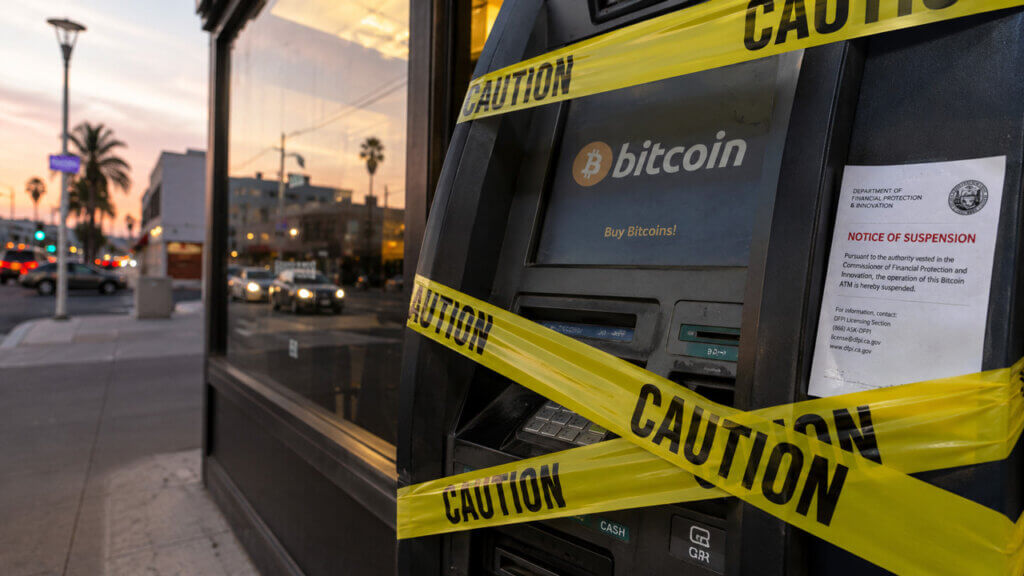
    Bitcoin ATMs were crypto’s street-corner bank. Now regulators are shutting the doorBitcoin ATMs were crypto’s street-corner bank. Now regulators are shutting the door
    Related Reading

    Bitcoin ATMs were crypto’s street-corner bank. Now regulators are shutting the door

    Crypto’s first real-world retail infrastructure is breaking down under the weight of scam complaints, legal pressure and the growing normalization of regulated Bitcoin investing.

    May 30, 2026 · Andjela Radmilac

    The scammer does not need to touch the machine

    The mechanics are simple enough to make the device dangerous. IC3 said typical kiosk complaints involve criminals providing detailed instructions on how to withdraw cash from a bank, locate a kiosk, and deposit and send funds using it.

    Its warning signs include people holding QR-code documentation they cannot explain, making large first-time cash withdrawals, speaking on the phone while appearing confused at a bank or kiosk, or lingering around the machine.

    California’s Department of Financial Protection and Innovation describes the same pattern in its consumer warning.

    A scammer contacts the victim, creates a sense of urgency, directs them to a crypto ATM, stays on the phone during the transaction, and may send a QR code that routes the purchased assets directly to the scammer’s wallet. The DFPI also highlights the danger in that the transactions are quick and immediate and cannot be reversed.

    FinCEN’s 2025 notice on convertible virtual currency kiosks explains why that workflow is attractive to criminals.

    A CVC kiosk purchase looks like a standard ATM transaction to a user, but the wallet address that receives the crypto may belong to someone else and is often embedded in a QR code. FinCEN said scammers often keep victims in constant phone or online contact until payment is completed.

    It also said scammers may instruct victims to split deposits across amounts or machines to avoid safeguards.

    The economics add another clue. Kiosk fees can range from 7% to 20%, but scammers tolerate the cost because crypto can move quickly upon receipt, and recovery can be difficult.
    The US Bitcoin ATM industry is breaking under fraud, bans, and feesThe US Bitcoin ATM industry is breaking under fraud, bans, and fees
    Related Reading

    The US Bitcoin ATM industry is breaking under fraud, bans, and fees

    Bitcoin Depot’s collapse shows how fraud losses, state bans, KYC rules, and high fees are forcing a reassessment of the US Bitcoin ATM model.

    May 19, 2026 · Gino Matos

    For a legitimate buyer, a high fee is a bad deal. For a criminal trying to convert a victim’s cash into fast-moving crypto, it can be part of the business model.

    That is why the device sits at the center of the question of responsibility. The victim may be the one pressing buttons, but the transaction often includes visible warning signs before the funds move.

    The warning signs include a large cash withdrawal, a nervous customer, a phone call that does not end, a QR code supplied by someone else, repeated deposits, or a destination wallet the customer cannot explain.

    CryptoSlate Daily Brief

    Daily signals, zero noise.

    Market-moving headlines and context delivered every morning in one tight read.

    5-minute digest 100k+ readers

    Free. No spam. Unsubscribe any time.

    Whoops, looks like there was a problem. Please try again.

    You’re subscribed. Welcome aboard.

    Operators and banks are now part of the control surface

    FinCEN has urged financial institutions to identify and report suspicious activity involving CVC kiosks. It also warned that the risk of illicit activity is higher when operators fail to meet Bank Secrecy Act obligations.

    That puts pressure on both sides of the kiosk business. Operators have to monitor the customer and the transaction. Banks and credit unions that serve the operators have to understand whether a kiosk business has real anti-fraud and anti-money-laundering controls.

    FinCEN said non-compliant operators are especially vulnerable to abuse by scammers and other criminals. It said some scammers direct victims to specific kiosks, sometimes across state lines, likely to avoid stronger controls.

    California’s DFPI says the state’s Digital Financial Assets Law prohibits kiosk operators from accepting more than $1,000 per person per day.

    CryptoSlate’s recent coverage of Florida’s new crypto ATM law described another model with warnings, receipts, transaction caps, registration, and conditional refunds that can shift some of the scam risk onto operators.
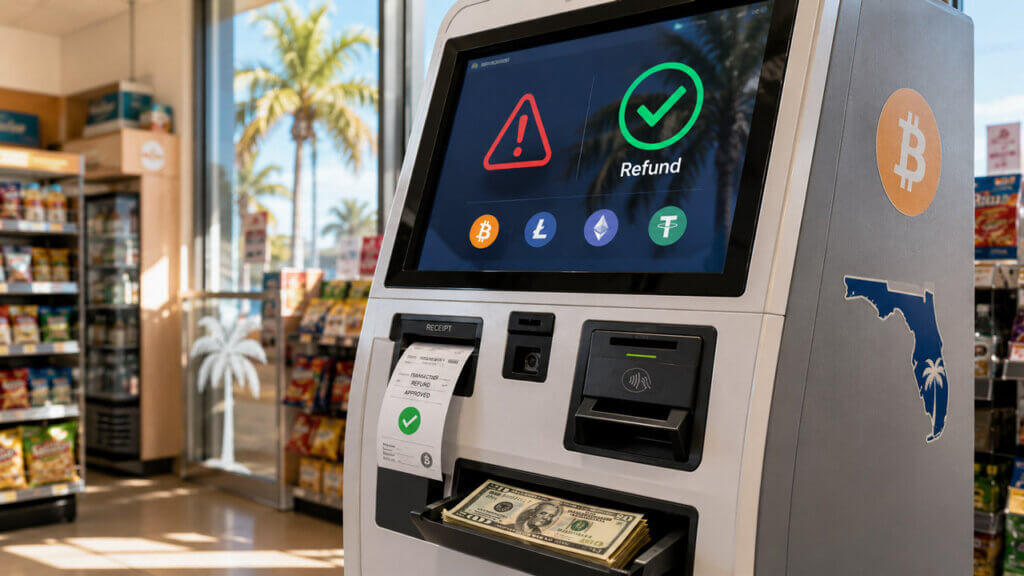
    Florida’s new crypto ATM law makes scam refunds the cost of doing businessFlorida’s new crypto ATM law makes scam refunds the cost of doing business
    Related Reading

    Florida’s new crypto ATM law makes scam refunds the cost of doing business

    HB 505 tests whether caps, receipts, warnings, and conditional refunds can shift fraud costs onto kiosk businesses.

    Jul 1, 2026 · Liam ‘Akiba’ Wright

    Those examples form a state-level menu rather than a national standard: lower daily limits, clearer warnings, live customer support, refund rights, operator registration, bank monitoring, and direct calls from operators when a transaction appears to be fraudulent.

    Each approach aims at the same small window of time between cash withdrawal and blockchain settlement.

    The FTC’s earlier Bitcoin ATM data spotlight helps explain the urgency. It said reported fraud losses involving Bitcoin ATMs increased nearly tenfold from 2020 to 2023 and topped $65 million in the first half of 2024, with a median reported loss of $10,000 in that six-month period.

    It also said older adults were hit disproportionately.

    IC3’s 2025 kiosk figures framed that concern within a larger official context. More than half of the kiosk complaints involved people over 50, resulting in losses of over $302 million.

    That is a household-finance risk, often arriving through the same places where people already buy gas, groceries, and convenience-store goods.

    The next test is whether those everyday touchpoints can become interruption points. A bank teller who questions a rushed cash withdrawal, an operator who blocks a suspicious transaction, a state cap that prevents a full account drain, or a family member who recognizes the script can all change the outcome before the money moves.

    After the transaction, the tools are weaker. The fraud may still be traceable on-chain, but the funds can move through wallets and exchanges faster than a victim can understand what happened.

    That asymmetry is drawing scrutiny because the kiosk may be the last practical place to stop the transfer.

    If operators, banks, and lawmakers cannot make that moment safer, the official numbers point toward a harsher conclusion. The weakest link in the crypto scam pipeline may be the ATM-like machine that turns fear into a crypto transfer before anyone else can intervene.

    Community,Crime,Featured,Scams,AI,Bitcoin,BTC,payments,regulationAI,Bitcoin,BTC,payments,regulation#Bitcoin #ATMs #stop #Americas #11B #crypto #scam #pipeline1783612131

    11B AI Americas ATMs Bitcoin BTC Crypto Payments Pipeline regulation Scam stop
    Share. Facebook Twitter Pinterest LinkedIn Tumblr Email
    行政
    • Website

    Related Posts

    Cardano’s wallet hack exposed the user layer holding its on-chain government together

    July 9, 2026

    CLARITY Act misses July target making August 7 a critical date for the bill

    July 9, 2026

    A $1 billion HYPE treasury trade is hitting public markets before liquidity has been tested

    July 9, 2026

    Bitcoin’s bottom needs long-term holders to stop losing $280M a day

    July 9, 2026
    Add A Comment

    Leave A Reply Cancel Reply

    Top Posts

    Millennials Are Quitting Job to Become Day Traders

    January 20, 2021

    Jack Dorsey Says Bitcoin Will Unite The World

    January 15, 2021

    Hong Kong Customs Arrest Four in Crypto Laundering Bust

    January 15, 2021

    Subscribe to Updates

    Get the latest sports news from SportsSite about soccer, football and tennis.

    Advertisement
    Demo

    Your source for the serious news. This demo is crafted specifically to exhibit the use of the theme as a news site. Visit our main page for more demos.

    We're social. Connect with us:

    Facebook Twitter Instagram Pinterest YouTube
    Top Insights

    Kresus launches crypto inheritance service for self-custody wallet users

    July 9, 2026

    Why Bitcoin ATMs are becoming the last stop in America’s $11B crypto scam pipeline

    July 9, 2026

    Cardano’s wallet hack exposed the user layer holding its on-chain government together

    July 9, 2026
    Get Informed

    Subscribe to Updates

    Get the latest creative news from FooBar about art, design and business.

    Facebook Twitter Instagram Pinterest
    • Home
    • Business
    • Markets
    • Technology
    • Contact us
    © 2026 ThemeSphere. Designed by WPfastworld.
    • Easterngifts
    • koreanbj
    • korean bj porn​
    • korean bj nude

    Type above and press Enter to search. Press Esc to cancel.