
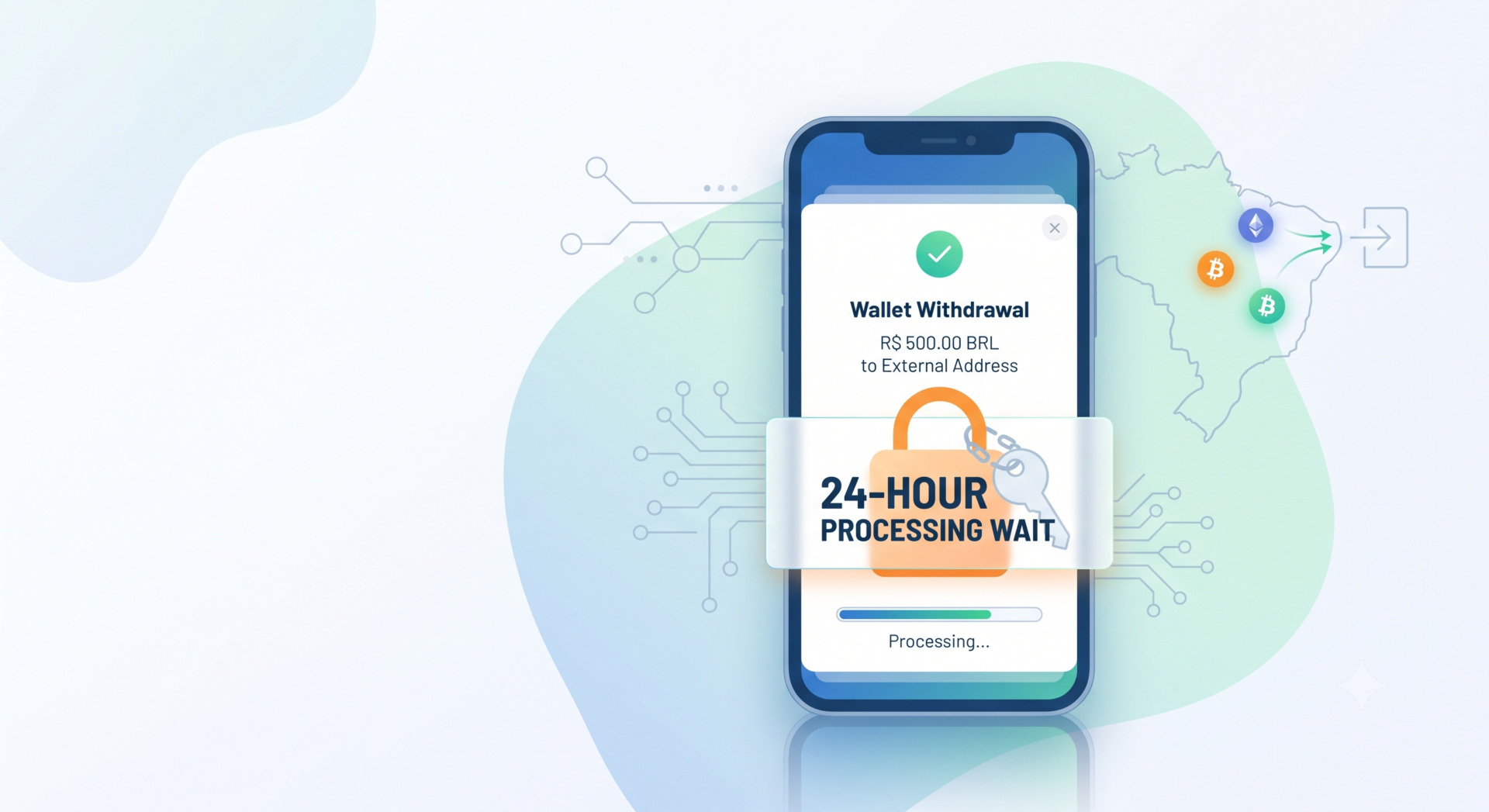

- Resolução BCB nº 584, approved on 6 August and published the next day, takes effect on 1 January 2027 and requires a 24-hour precautionary hold on certain outbound crypto transfers.
- The hold applies to transfers to self-custody wallets and to virtual asset firms abroad above a reported US$10,000 per client per day, with smaller transfers held if a provider flags them.
- ABcripto president Julia Rosin said the rule is the inverse of its stated objective and would mean less traceability for regulators.
Brazil’s central bank will require crypto firms to hold certain customer transfers for 24 hours before releasing them, under a resolution published last week that takes effect on 1 January 2027.
Resolução BCB nº 584 was approved by the Banco Central do Brasil’s board on 6 August. It creates a precautionary retention period that starts when a provider receives the funds behind a deposit, and it applies when the destination is a self-custody wallet or a firm operating in the virtual asset market abroad.
The trigger is at US$10,000 (AU$14,200) per client per day, and smaller transfers can also be held where a provider’s own screening flags them as risky.
Read more: Senate Races to Resolve Sticking Points as Crypto Market Structure Bill Faces Recess Deadline
What the Rule Does Not Do
Providers keep discretion to release funds before the 24 hours elapse where their own risk parameters are satisfied. A flagged transfer is delayed, then released or rejected once the provider has assessed it. Holding coins in a self-custody wallet, or moving them below the threshold, is untouched.
The resolution rests on Law nº 14,478, Brazil’s crypto legal framework, and covers virtual assets referenced to fiat currencies, which brings stablecoins inside its scope. Nothing changes for Brazilian users until the start of 2027.
The central bank’s stated purpose is to curb the use of digital assets in financial fraud, giving firms time to weigh customer, transaction, counterparty and jurisdiction risk before an operation completes.
Industry Pushes Back
Julia Rosin, president of the Brazilian crypto-economy association ABcripto, argued the measure works against itself. “What is visible to the Central Bank today stops being visible,” she said.
“It is the inverse of the stated objective: less traceability, less user protection and less institutional capacity to respond when something goes wrong.” Bloquo chief executive Carlos Russo said the rule sets no objective criteria for exceptions, leaving each provider to write its own policy.
Brazil’s central bank published sweeping rules for virtual asset providers in November, requiring authorisation and banking-style standards for governance, consumer protection and cybersecurity, then barred crypto from regulated cross-border payment rails, capping transfers to unauthorised counterparties at US$100,000 (AU$142,000).
Those rules took effect in February and treat stablecoin purchases, sales and international transfers as foreign exchange operations. A flat 17.5% capital gains rate already covers self-custodied and offshore holdings, and Brazilian reports put the deadline for providers to hold an operating licence at 30 October.
Read more: Jim Cramer Says He’s Selling Bitcoin Over Quantum Computing Fears
Brazil,Crypto Wallets,Law#Brazil #Impose #24Hour #Wait #Crypto #Wallet #Withdrawals1786350068
